Source customized rubber motorcycle o rings for cars, cylinders, and seals
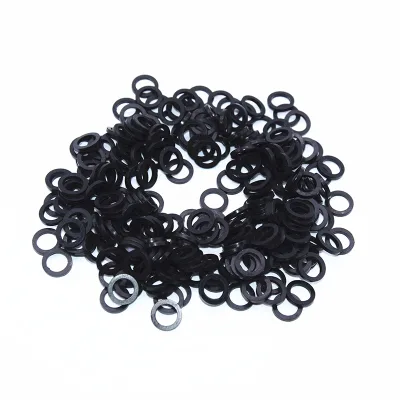
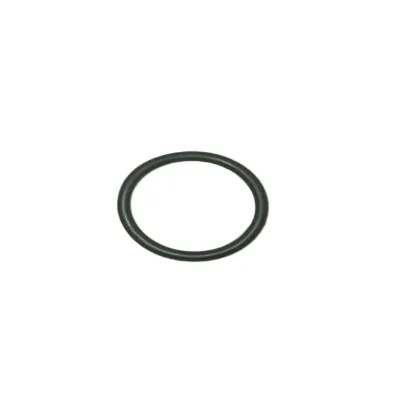
Compare 30 listings for customized rubber motorcycle o rings designed for automotive, cylinder, and mechanical seal applications. Buyers can review specifications including material, hardness, and packing options to find suitable stationary seals.
Key considerations
Products List




Comprehensive Sourcing Guide
Strategic Sourcing Guide for Customized Rubber Motorcycle O-Rings
Procuring customized rubber motorcycle O-rings requires a disciplined approach that balances specific mechanical requirements with supply chain reliability. The market for these components is vast, yet the specific needs of motorcycle engineering—ranging from clutch systems to suspension units—demand precise verification of material properties and dimensional tolerances. This guide outlines the essential factors buyers must evaluate when sourcing these critical sealing solutions, ensuring that the final product meets the rigorous demands of automotive and motorcycle applications without compromising on quality or compliance.
Technical Specifications and Material Selection
The foundation of a successful procurement strategy lies in a deep understanding of the technical specifications required for the specific motorcycle application. Unlike generic sealing products, motorcycle O-rings often operate under extreme conditions, including high temperatures, exposure to oils, and dynamic mechanical stress. The supplied product data indicates that hardness is a critical variable, typically ranging from 30 to 90 Shore A. This wide range allows for the selection of seals that can accommodate both soft, flexible applications and those requiring higher structural integrity under pressure. Buyers must verify that the supplier can produce O-rings within this specific hardness spectrum to match the design intent of the component.
Material composition is equally paramount. The observed data highlights NBR (Nitrile Butadiene Rubber) and EPDM (Ethylene Propylene Diene Monomer) as key materials available in the market. NBR is frequently selected for its excellent resistance to oils and fuels, making it a primary candidate for engine-related seals. Conversely, EPDM offers superior resistance to weathering, ozone, and steam, which may be preferable for exterior or cooling system applications. The product attributes also list "High-Temp Vehicle O Ring" and "Oil-Resistant Vehicle O Ring" as distinct performance categories, suggesting that the material selection must be explicitly aligned with the thermal and chemical environment of the specific motorcycle part.
Furthermore, the shape and type of the seal are standardized yet customizable. The primary shape is the O-Ring, classified as a Stationary Seal in many contexts, though dynamic applications like suspension or steering systems also utilize similar geometries. The tolerance levels are described as adhering to International Standards, yet the "Nonstandard" and "Customized" attributes appear frequently in the data. This duality indicates that while standard sizes exist, the majority of high-performance motorcycle applications require custom dimensions. Buyers should confirm that the supplier can maintain tight tolerances on custom molds, as even minor deviations can lead to seal failure in high-pressure hydraulic or pneumatic systems.
Compliance, Certification, and Standard Verification
Navigating the compliance landscape for industrial rubber components requires careful verification of certifications and adherence to established standards. The product data presents a mix of certification claims, including ISO/ATF 2016, CE, and ISO9001, alongside various standard designations like AS568 and general "Standard" or "Nonstandard" classifications. It is crucial for buyers to treat these as observations that require validation rather than universal guarantees. For instance, while AS568 is a widely recognized standard for O-ring dimensions, the data also lists "Customized" and "As per catalog or your drawing" as standard types. This implies that many suppliers operate on a custom basis where the AS568 standard may serve as a reference rather than a strict constraint.
When evaluating a supplier, the buyer must request proof of the specific certifications mentioned. ISO9001 is a fundamental quality management standard that indicates a supplier's commitment to consistent manufacturing processes. However, the presence of a certification label does not automatically ensure that every batch of O-rings meets the specific performance criteria required for a motorcycle application. Buyers should verify if the supplier's quality management system covers the specific material grades (NBR, EPDM) and the specific customization processes (molding, curing) relevant to the order.
The "International Standard" tolerance mentioned in the data suggests a baseline for dimensional accuracy, but the "Nonstandard" classification indicates that many orders deviate from these norms. In such cases, the supplier must demonstrate their ability to meet the buyer's specific drawing requirements with high precision. The data also notes "Customized" as a standard attribute for the product itself, reinforcing the need for a robust communication channel where the buyer provides detailed technical drawings and the supplier confirms their capability to meet those exact specifications.
Cost Drivers and Pricing Structures
Understanding the cost drivers for customized rubber O-rings is essential for budgeting and negotiation. The observed price range in the market data is notably low, listed between 0 and 5 USD, which likely reflects unit pricing for small quantities or specific promotional listings rather than the total cost of a custom order. The actual cost of a customized order is heavily influenced by the MOQ (Minimum Order Quantity), which ranges from 1 to 100,000 units in the observed data. This wide variance suggests that the unit price is highly sensitive to volume.
For low-volume orders, such as prototyping or small-batch replacements, the cost per unit will be significantly higher due to the setup costs associated with custom tooling and mold creation. Conversely, high-volume orders benefit from economies of scale, where the per-unit cost drops substantially. Buyers must clarify the pricing structure with suppliers to understand the break-even points for different volume tiers. The "Customized" nature of the product also implies that tooling costs may be a separate line item or amortized over the production run.
Additionally, the material choice plays a significant role in cost. EPDM and NBR have different market prices, and the specific compound formulations required for high-temperature or oil-resistant performance may incur additional costs. The data mentions "High-Temp" and "Oil-Resistant" as specific advantages, which often require specialized compounding that can increase the base material cost. Buyers should request a detailed cost breakdown that separates material costs, tooling fees, and processing charges to ensure transparency.
Typical Applications and Performance Requirements
The versatility of customized rubber O-rings is evident in the extensive list of applications observed in the product data. These components are integral to various systems within motorcycles, including the clutch, exhaust, water pump, battery, and suspension. The specific applications listed, such as "Motorcycle Clutch O Ring Seal," "Motorcycle Exhaust O Ring Gasket," and "Motorcycle Suspension O Ring," highlight the diverse environments these seals must withstand. Each application presents unique challenges; for example, exhaust seals must resist extreme heat, while suspension seals must handle dynamic movement and exposure to road debris.
The performance attributes listed, such as "Corrosion," "Temperature," and "Wear," are critical indicators of the seal's durability. A seal designed for a water pump must exhibit excellent temperature resistance and wear properties to prevent leakage under continuous operation. Similarly, an O-ring for a battery compartment must be resistant to chemical corrosion from electrolytes. The data also includes "Vehicle Rubber O Ring Kit" and "Universal Vehicle O Ring Size," suggesting that some suppliers offer pre-packaged solutions for common maintenance scenarios, while others focus on bespoke components.
Buyers should map their specific application requirements against these performance attributes. For instance, if the application involves high-temperature exposure, the buyer must verify that the selected material (likely EPDM or a specialized NBR compound) can withstand the operating temperature without degrading. If the application involves exposure to oils or fuels, the oil resistance of the material becomes the primary selection criterion. The "Seal Mechanical" advantage noted in the data suggests that the supplier's products are designed to maintain mechanical integrity under stress, a crucial factor for dynamic applications like steering or suspension systems.
Supplier Evaluation and Quality Control
Selecting the right supplier is a critical step that goes beyond price comparison. The data indicates that suppliers are located in regions such as Dongguan and Shangrao in China, which are known manufacturing hubs. However, the location alone does not guarantee quality. Buyers should evaluate suppliers based on their technical capabilities, specifically their ability to handle "Customized" orders with "International Standard" tolerances. The presence of "Customized" as a standard attribute suggests that the supplier's core competency lies in flexible manufacturing rather than mass-producing standard off-the-shelf items.
Quality control processes should be a central part of the supplier evaluation. The data mentions "ISO9001" and "AS568" as relevant standards, but buyers must verify that the supplier has a documented quality control system that covers the entire production process, from raw material inspection to final packaging. The packaging methods observed, such as "PE Bag Inside, Carton Outside" or "First in Perubber O-Rings," indicate attention to protection during transit, but buyers should ensure that the packaging prevents contamination or damage, especially for custom parts that may be sensitive to environmental factors.
Suppliers should also demonstrate their ability to provide test results or performance data for their custom products. While the data does not list specific test results, a reputable supplier will be able to provide documentation verifying that their O-rings meet the specified hardness, material composition, and performance criteria. Buyers should request samples for testing before committing to a large order, ensuring that the physical properties of the seal match the design requirements.
Long-Term Procurement Considerations
Sourcing customized rubber O-rings is not a one-time transaction but a long-term partnership that requires careful planning. The "Customized" nature of the product means that the buyer is dependent on the supplier's ability to maintain the specific mold and material formulation over time. If a supplier changes their raw material source or production process, it could affect the performance of the O-rings, potentially leading to failures in the field. Therefore, buyers should establish clear agreements regarding material consistency and process stability.
The lead time and production capacity are also critical long-term considerations. The observed MOQ range of 1 to 100,000 units suggests that suppliers can accommodate both small and large orders, but the lead time may vary significantly based on the complexity of the customization. Buyers should negotiate lead times that align with their production schedules and ensure that the supplier has the capacity to scale up production if demand increases.
Finally, the "Nonstandard" and "Customized" attributes highlight the importance of documentation. Buyers should maintain detailed records of the specifications, drawings, and material certifications for each order. This documentation is essential for future re-orders, troubleshooting, and quality audits. By treating the procurement of customized O-rings as a strategic initiative rather than a simple purchase, buyers can ensure a reliable supply chain that supports the long-term performance and safety of their motorcycle products.
FAQs
Can customized rubber motorcycle o rings meet international tolerance standards?
Yes, these seals can adhere to international standard tolerances while offering nonstandard custom dimensions. Buyers must verify that the supplier maintains precision on custom molds to ensure the O-ring fits specific mechanical requirements without leakage.
Which materials are available for high-performance motorcycle sealing applications?
NBR and EPDM are the primary materials available for these customized seals. NBR offers excellent oil resistance for engine parts, while EPDM provides superior weathering and temperature resistance for exterior or cooling system applications.
What hardness range is typical for these stationary rubber seals?
The hardness typically ranges from 30 to 90 Shore A to accommodate various mechanical stresses. This spectrum allows selection of seals that balance flexibility for soft applications with structural integrity for high-pressure environments.
How are these custom O rings packaged for safe international shipping?
Standard packaging involves a PE bag inside with a carton outside to protect the seals. Some suppliers also use specific first-in-first-out methods to ensure the rubber remains uncontaminated during transit.
Which certifications should buyers verify for quality management in this sector?
Buyers should verify ISO9001 and ISO/ATF 2016 certifications as indicators of quality management systems. These standards suggest the supplier maintains consistent manufacturing processes for custom rubber components.
What is the minimum order quantity for custom motorcycle O ring production?
The minimum order quantity ranges from 1 to 100,000 units depending on the supplier and customization level. Low-volume orders may incur higher unit costs due to tooling setup, while large volumes benefit from economies of scale.